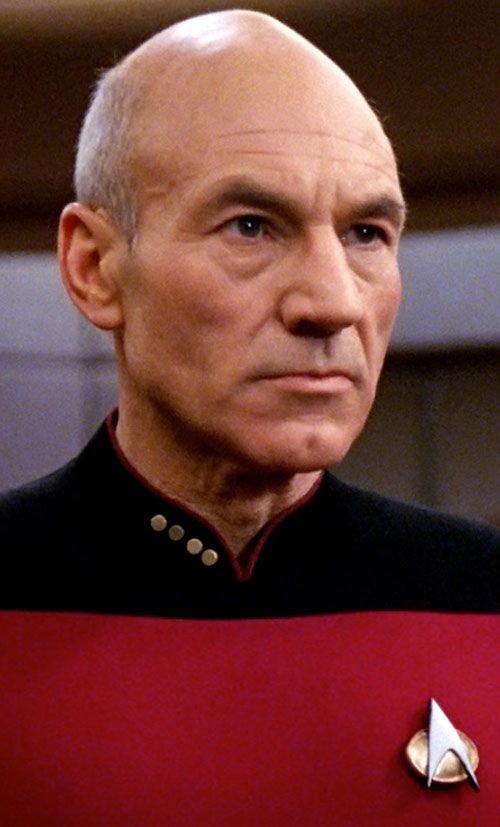
Jean-Luc Picard isn't just a character; he's an institution, a guiding star in the vast narrative of Star Trek. From his initial appearance as the stern, uncompromising captain of the USS Enterprise-D, the arc of The Evolution of Jean-Luc Picard traces a profound journey from an intellectual leader to a deeply empathetic, even vulnerable, elder statesman. His story is one of duty, trauma, redemption, and ultimately, a nuanced understanding of what it truly means to be human—and beyond.
At a Glance: Jean-Luc Picard's Enduring Legacy
- Early Years: Born in La Barre, France, dreamed of Starfleet, excelled academically, passionate about archaeology.
- The Captain: Commanded the USS Stargazer and the iconic USS Enterprise-D, known for diplomacy, intellect, and moral fortitude.
- The Trauma: Assimilated by the Borg as Locutus, an experience that scarred him deeply and forever altered his worldview.
- The Films: Led the TNG crew through four cinematic adventures, battling the Borg, confronting personal loss, and witnessing Data's sacrifice.
- The Retirement: Stepped away from Starfleet, grappling with past failures and a failing body, only to be drawn back into galactic crises.
- The Transformation: Died from Irumodic syndrome, reborn into a synthetic body, extending his life and allowing new adventures.
- The Father: Discovered he had a son, Jack Crusher, and confronted the ultimate challenge of fatherhood and family legacy.
- The Elder Statesman: Evolved into a figure of wisdom, connection, and profound emotional depth, finally finding peace with his past and embracing his future.
The Captain's Chair: Diplomacy, Principle, and the Enterprise-D Era
When Jean-Luc Picard first graced our screens in 1987, he immediately stood apart. Where Captain James T. Kirk was a man of impulsive action, quick fists, and daring gambits, Picard presented a new paradigm for Starfleet leadership. He was a diplomat, a scholar, a man whose first instinct was always to negotiate, to understand, and to uphold the highest ideals of the Federation. His command of the USS Enterprise-D was characterized by intellectual rigor and a deep respect for new life and civilizations. Phrases like "Make it so" and "Engage" became synonymous with his decisive yet measured approach.
Picard's early years as captain weren't just about exploring strange new worlds; they were about exploring complex moral and ethical landscapes. Perhaps no episode better defines his foundational character than "The Measure of a Man," where he passionately argues for Data's sentient rights, declaring that Data is not property but a unique form of life deserving of individual freedoms. This unwavering commitment to universal justice and equality became a hallmark of his character. He believed in the truth above all else, famously stating, "The first duty of every Starfleet officer is to the truth."
Beyond the captain's uniform, glimpses of Picard's personal life began to emerge, softening his initially stoic exterior. In "The Inner Light," he lived an entire lifetime on a dying alien planet in a matter of minutes, experiencing love, fatherhood, and loss, profoundly impacting his empathy. "Family" revealed his fraught relationship with his brother and his deep affection for his nephew, showing a man capable of warmth and familial bonds, despite his career-driven path. This era firmly established Captain Picard as a beacon of Starfleet ideals and a complex, evolving human being.
The Scars of Locutus: Trauma, Transformation, and the Borg's Enduring Shadow
No event in Picard's long career had a more profound and lasting impact than his assimilation by the Borg in "The Best of Both Worlds." Transformed into Locutus of Borg, he became an unwilling instrument of destruction against the very organization he championed. While eventually rescued, the psychological trauma was immense and permanent. This wasn't merely a physical ordeal; it was a violation of his identity, a forced communion with a collective mind that sought to erase individuality.
The assimilation left neurological scars, manifesting later in life as Irumodic syndrome, a degenerative neurological disorder directly linked to the Borg's alterations to his genome. This wasn't just a plot device; it was a physical manifestation of his deep-seated trauma, a constant reminder of the day he lost himself. Yet, from this crucible of horror, Picard emerged with a deepened empathy and an even fiercer resistance to forces that would undermine individual freedoms. His experiences with the Borg fueled a personal vendetta that would resurface repeatedly, showcasing a raw, emotional core beneath his polished exterior. The incident also made him more understanding of the plight of others who had been assimilated, like Seven of Nine, forging unexpected bonds based on shared experience.
From Screen to Silver Screen: Leadership in the Cinematic Era
The evolution of Picard continued as the TNG cast transitioned to the big screen. In Star Trek Generations (1994), he grappled with personal loss, the destruction of the Enterprise-D, and the philosophical dilemma of an altered timeline, demonstrating his capacity for leadership even in profound grief. He found solace in his crew and the new USS Enterprise-E, which he would command for the subsequent films.
First Contact (1996) stands as a pivotal moment, showcasing Picard's enduring trauma from the Borg. His vendetta against the collective threatened to consume him, forcing Commander Riker to remind him that he was bordering on Captain Ahab. This film highlighted his capacity to lead under duress, but also revealed his dangerous blind spots when his personal demons were engaged. It was a raw, visceral look at the psychological toll of Locutus.
Insurrection (1998) saw Picard once again upholding Starfleet's highest principles, defying orders to protect a peaceful civilization from exploitation, proving his moral compass remained firmly pointed towards justice. Finally, Nemesis (2002) presented perhaps his most personal challenge yet: a confrontation with his Romulan clone, Shinzon. The film explored themes of identity, destiny, and concluded with the heartbreaking sacrifice of Data, a loss that profoundly impacted Picard and left a lasting void. These films solidified Picard's standing as a captain who wasn't afraid to confront external threats or his own internal struggles.
A Retirement Interrupted: The Star Trek: Picard Era
Nearly two decades after Nemesis, Star Trek: Picard (2020-2023) picked up with Jean-Luc as a retired Starfleet admiral, living a quiet life at his vineyard, Château Picard, in La Barre, France. This new chapter revealed a man haunted by past decisions, particularly his failure to save the Romulans from the Hobus supernova, a mission he resigned from Starfleet over. He was a man out of time, burdened by guilt and a sense of irrelevance.
Season 1: A New Body, a Renewed Purpose
Picard's peaceful retirement was shattered by the appearance of Dahj Asha, a synthetic woman who drew him into a dangerous conspiracy to suppress all synthetic life. This journey forced him to confront his own prejudices, his past relationships, and the very nature of consciousness. As his Irumodic syndrome worsened, Picard's human body ultimately gave out. In a poignant reunion, he requested to die after a final conversation with a simulation of Data's consciousness. His consciousness, however, was transferred into a synthetic "golem" body, configured for a natural lifespan, allowing him to continue his adventures beyond the limitations of his original flesh. This marked a profound, almost philosophical, evolution – Picard became a synthetic, a being he once fought to protect, now embodied.
Season 2: Confronting Ghosts and Fixing Time
In 2401, now Chancellor of Starfleet Academy, Picard was challenged by his old nemesis, Q. Q plunged him into an alternate, xenophobic timeline, forcing Picard and his makeshift crew to travel back to 2024 Los Angeles. Their mission: to restore the timeline by ensuring his ancestor, Renée Picard, embarked on a pivotal Europa mission. This personal journey through time became an emotional one for Picard, forcing him to confront long-held beliefs about his estranged father and the tragic suicide of his mother. Through this experience, he found a profound sense of peace and forgiveness. Q, in his final act before ascending, revealed this journey was his last gift to Picard, helping him find closure. Upon returning to his own time, Picard formed an unprecedented alliance with the Borg for anomaly research and began a new romance with his Romulan housekeeper, Laris, embracing love later in life.
Season 3: The Father, The Son, and The Borg's Final Threat
Later in 2401, Picard received a cryptic distress call from his old flame, Dr. Beverly Crusher. This led to the shocking revelation that they shared a son, Jack II, whom Beverly had hidden from him to protect him from Picard's many enemies. This discovery ignited a deeply personal quest, with Picard and Riker commandeering the USS Titan to rescue Beverly and Jack.
Their mission quickly unraveled a rogue Changeling conspiracy, working in tandem with a resurgent Borg Collective. The plot: to infiltrate Starfleet and assimilate its young members, using Picard's original body's altered genome via transporter codes. The fate of Starfleet, and indeed the galaxy, rested on the shoulders of the reunited Enterprise-D crew, who, in a fan-favorite moment, resurrected their secretly rebuilt flagship.
The climax saw Picard face the Borg Queen one last time, confronting his assimilated son, Jack. In a truly emotional and unprecedented act, Picard plugged into the Borg hive mind, not to fight, but to profess his fatherly love, pulling Jack back from the brink of assimilation. Meanwhile, Beverly Crusher heroically destroyed the Borg Queen's power source, eliminating the collective once and for all. By 2402, Picard, Beverly, and the entire Enterprise-D crew were content, with Jack Crusher embarking on his first Starfleet assignment aboard the rechristened USS Enterprise-G, carrying on the legacy. This final season saw Picard complete his evolution, not just as a leader, but as a father who finally embraced his family.
Picard's Enduring Legacy: Diplomat, Explorer, Humanist
Jean-Luc Picard's journey is one of continuous growth and self-discovery. He began as an almost idealized figure of Starfleet, an intellectual and moral arbiter. Over decades, his character deepened, revealing layers of trauma, regret, and ultimately, a profound capacity for love and vulnerability.
His lifelong passion for archaeology underscored his belief in understanding the past to illuminate the future. His intellectual curiosity was boundless, matched only by his unwavering commitment to the principles of universal justice and equality. While he often chose diplomacy, he was not afraid to fight for what was right, even against overwhelming odds.
The debate between Picard's intellectual, diplomatic approach and Kirk's impulsive action continues to define discussions among fans. Yet, Picard's reputation as the ultimate delegator, a captain who trusted and empowered his crew, remains unchallenged. Sir Patrick Stewart himself noted that playing Picard made him a better listener and helped bridge the gap between Shakespearean drama and science fiction audiences, demonstrating the character's profound cultural impact.
While non-canon works, such as the Pocket Books novels, explored alternative futures—depicting him as the Federation Ambassador to Vulcan or even married to Beverly Crusher with a son named René Jacques Robert François Picard—it's the official canon that truly cemented his extraordinary evolution.
The Next Frontier: What Picard Taught Us
The evolution of Jean-Luc Picard is more than just a character arc; it's a testament to the human capacity for growth, resilience, and connection. He taught us that leadership isn't just about command, but about empathy; that strength isn't just about power, but about vulnerability; and that the pursuit of truth and justice is a lifelong endeavor, regardless of the body you inhabit.
His journey, from a stern captain who kept emotional distance to a loving father willing to sacrifice everything for his son, shows us that even the most principled among us must continually evolve, learn, and open ourselves to the messy, beautiful complexities of life. Picard reminds us that the quest for self-understanding is as vital as the exploration of distant galaxies, and that sometimes, the greatest frontier lies within.