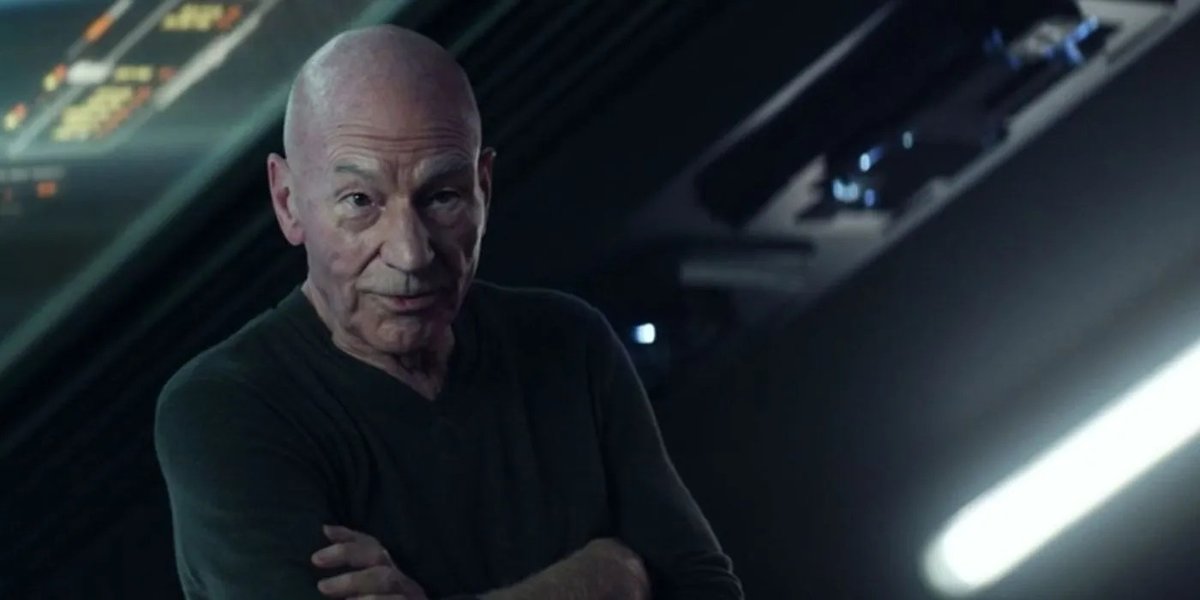
When you think of a Starfleet captain, your mind might instantly conjure the image of Jean-Luc Picard. For nearly four decades, across seven seasons of Star Trek: The Next Generation (TNG) and three seasons of Star Trek: Picard, Sir Patrick Stewart has imbued the character with a gravitas, intellect, and profound humanity that set a new benchmark for leadership in science fiction. His journey is a tapestry woven with ethical dilemmas, deeply personal traumas, thrilling adventures, and the unwavering pursuit of understanding—all defining "Picard's Most Memorable Episodes & Conflicts." These are the moments that didn't just entertain; they shaped a character who became a moral compass for a generation and revealed the full spectrum of a man who evolved from an intellectual diplomat to a fierce protector, a reluctant hero, and ultimately, a father.
At a Glance: Picard's Defining Journey
- A New Breed of Captain: Picard redefined Starfleet leadership, emphasizing diplomacy, intellect, and ethical reasoning over brute force, though he proved adept at action when necessary.
- Confronting Personal Trauma: Episodes like "Family" and "Chain of Command" unflinchingly explored Picard's vulnerability and the deep psychological scars left by assimilation and torture.
- Intellectual & Philosophical Puzzles: Many of his most celebrated conflicts involved navigating complex communication barriers ("Darmok"), questioning justice ("The Drumhead"), or grappling with fate and identity ("Tapestry," "The Inner Light").
- The Borg & Q: Recurring Nemeses: These powerful entities frequently challenged Picard's understanding of humanity, the galaxy, and his own limitations.
- Legacy and Family in Picard: The later series delved into his longing for connection, his unexpected fatherhood, and the enduring bonds with his former Enterprise crew, culminating in a deeply emotional reunion.
- A Hero for All Ages: From his younger, reckless days to his elder statesman role, Picard consistently championed Starfleet ideals, proving that courage isn't always a phaser blast, but often a quiet defiance or a compassionate choice.
The Making of a Legend: TNG's Defining Trials and Triumphs
Star Trek: The Next Generation introduced us to a Starfleet captain unlike any before him. Jean-Luc Picard was a scholar, an archeologist, a lover of Shakespeare, and a man who preferred negotiation to phaser fire. Yet, when pushed, he revealed an unwavering moral core and a surprising capacity for daring. Here are some of the most pivotal episodes that forged the legendary captain we know.
Humanity's First Contact with the Borg: The Unsettling Truth of "Q Who" (Season 2)
Before "Resistance is futile" became a chilling catchphrase, there was "Q Who." This episode marked humanity's terrifying introduction to the Borg, and it came courtesy of the omnipotent Q. Annoyed by Picard's perceived arrogance and Starfleet's naïveté about the galaxy's true dangers, Q flung the Enterprise D-7,000 lightyears into uncharted space, directly into the path of a Borg cube.
Picard, initially confident in Starfleet's readiness, was forced to confront the harsh truth: they were woefully unprepared. The Borg, a collective consciousness driven by assimilation, presented an existential threat unlike any encountered before. This encounter fundamentally altered the course of Picard's life and the Star Trek universe, revealing a vulnerability in Starfleet's utopian vision and planting the seeds for Picard's most profound trauma.
The Ultimate Test of Will: "Chain of Command, Part 2" (Season 6)
Few episodes showcase Picard's sheer fortitude and defiance more powerfully than "Chain of Command, Part 2." Captured by the Cardassians, Picard is subjected to brutal, dehumanizing torture by Gul Madred, brilliantly portrayed by David Warner. Madred's goal isn't just information, but to break Picard's spirit, famously attempting to force him to see five lights when only four are present.
Picard's unwavering, almost guttural cry of "There! Are! Four! Lights!" became an iconic moment of resistance. It's a testament to his unbreakable will, even as he later confided to Troi that he nearly capitulated. This episode is a masterclass in psychological warfare and a raw exploration of human endurance, cementing Picard as a symbol of defiance against oppression.
Confronting Trauma: "Family's" Raw Emotion (Season 4)
Immediately following his traumatic assimilation into the Borg as Locutus, Picard takes leave to visit his estranged brother, Robert, and nephew, René, at his family's vineyard in La Barre, France. "Family" is unique in TNG for being entirely set off the Enterprise, offering a rare glimpse into Picard's personal life and vulnerabilities.
The episode is a quiet masterpiece of character development. A heated confrontation with Robert, where his brother forces him to acknowledge the depth of his trauma, leads to Picard breaking down in tears. It's a profoundly human moment, revealing the deep psychological scars of his Borg experience and allowing the character, and the audience, to process the event's emotional weight. This episode was crucial for understanding Picard's future struggles, notably in Star Trek: First Contact.
A Lifetime in Minutes: "The Inner Light's" Enduring Poignancy (Season 5)
Widely regarded as one of Star Trek's greatest episodes, "The Inner Light" is a poignant exploration of memory, loss, and the human condition. Picard encounters an alien probe that renders him unconscious. He awakens on the dying planet Kataan, living an entire lifetime as Kamin, a husband, father, and flute player. He marries Eline, raises children, and experiences a full life, all while less than 30 minutes pass for the Enterprise crew.
When the probe deactivates, Picard is left with a single, physical remnant of his "other" life: a Kataan flute. He learns the probe was launched by a civilization millennia ago, before their sun went supernova, to preserve their culture and memories. The episode's power lies in its ability to condense a lifetime of experience into a short narrative, leaving Picard with profound wisdom and an indelible sense of loss. It's a beautiful meditation on what it means to live, love, and remember.
Communication, Culture, and Sacrifice: The Enigma of "Darmok" (Season 5)
"Darmok" is a brilliant exploration of communication barriers and the power of shared narrative. The Enterprise encounters the Tamarians, whose language is entirely metaphorical, making them incomprehensible to the universal translator. Their captain, Dathon, attempts to bridge the gap by beaming down to a planet with Picard, intending to forge a bond through shared experience against a dangerous beast.
Through Dathon's tragic sacrifice and Picard's eventual understanding of their idiom—"Darmok and Jalad at Tanagra," a story of two strangers uniting against a threat—a partial understanding is achieved. This episode showcases Picard's intellectual curiosity and diplomatic prowess, demonstrating that true communication often requires moving beyond literal translation to empathy and shared context. It's a reminder of the vast diversity of life in the galaxy and the universal need for connection.
A Deal with Destiny: "Tapestry" and Second Chances (Season 6)
In "Tapestry," Q again intervenes in Picard's life, this time after the captain is critically injured and dies. Q reveals Picard's artificial heart is a consequence of a reckless youth brawl, offering him a chance to alter his past. Picard chooses to avoid the fight, leading to a safer, uneventful career as a junior science officer—a life without risk, without the growth that shaped him.
Realizing he prefers his original, flawed self—the one forged by mistakes and challenges—Picard chooses to relive the pivotal fight. He awakens in sickbay, alive, accepting that his struggles and perceived imperfections were integral to becoming the man he is. "Tapestry" is a powerful philosophical episode about identity, the butterfly effect, and the importance of embracing one's past, flaws and all.
The Perils of Paranoia: "The Drumhead's" Witch Hunt (Season 4)
"The Drumhead" is a gripping courtroom drama that serves as a chilling allegory for McCarthyism and the dangers of unchecked power. After a Klingon officer is accused of espionage and a warp engine explodes, retired Admiral Norah Satie is dispatched to investigate. What begins as a legitimate inquiry quickly devolves into a fanatical witch hunt, fueled by Satie's paranoia.
Satie, a decorated but increasingly zealous officer, begins targeting anyone with unconventional views or non-human heritage, eventually accusing even Picard of disloyalty due due to his Borg assimilation. Picard, a staunch defender of civil liberties, fiercely counters her, quoting Satie's own father on the dangers of suppressing freedom. The episode showcases Picard's unwavering commitment to justice and due process, even when facing a respected figure blinded by zealotry.
Action Hero Unveiled: "Starship Mine's" Unexpected Turn (Season 6)
While primarily a diplomat and intellectual, Picard proved he could be a formidable action hero when the situation demanded it. In "Starship Mine," the Enterprise is undergoing a baryon particle sweep, requiring the crew to evacuate. Picard, avoiding a social event, finds himself alone on the ship with a group of thieves attempting to steal trilithium resin from the warp core.
Channeling his inner John McClane, Picard single-handedly outwits and dispatches the thieves, even using a Vulcan neck pinch on a young Tim Russ (who would later play Tuvok). This episode is a fun, unexpected turn for the character, revealing a rugged, resourceful side that often lay dormant beneath his polished Starfleet demeanor. It’s a great example of Picard's multifaceted capabilities, demonstrating that Star Trek TNG's Captain Picard was far more than just a man of words.
Holodeck Hijinks and Hidden Affinities: "The Big Goodbye" (Season 1)
Early in TNG, "The Big Goodbye" introduced us to Picard's fondness for holodeck simulations, specifically the fictional private detective Dixon Hill. While preparing for rigorous diplomatic talks, Picard, Dr. Crusher, and Data escape into a 1940s detective noir program. An invasive probe from the Jaradans malfunctions the holodeck, trapping them inside and making the characters unexpectedly dangerous.
This episode established the recurring "holodeck-gone-wrong" trope, but more importantly, it offered a lighter, more humorous side of Picard. His enthusiasm for the Dixon Hill character provides a charming contrast to his usual austere persona, showing that even a Starfleet captain needs an escape, and sometimes, that escape can lead to unforeseen adventure.
Vacation, Vash, and Valuables: "Captain's Holiday" (Season 3)
A reluctant vacationer, Picard is sent to the pleasure planet Risa by Commander Riker. His "holiday" quickly turns into an adventure when he meets the enigmatic rogue archeologist Vash and the scheming Ferengi Sovak, all entangled in a quest for a powerful future relic called the Uthat.
"Captain's Holiday" offers a rare glimpse of Picard in a romantic and adventurous context outside his command duties. Vash challenges his intellectualism with her passion for daring and mystery, leading to a delightful cat-and-mouse chase filled with twists. It's a refreshing episode that humanizes Picard further, showcasing his capacity for impulsiveness and a dash of romance.
The Final Frontier of Self-Discovery: "All Good Things..." (Series Finale)
The TNG series finale, "All Good Things...", brought Picard's journey full circle with his old adversary, Q. The omnipotent being sends Picard hurtling through three timelines—past, present, and a bleak future where he suffers from Irumodic Syndrome—forcing him to solve a mystery that simultaneously threatens to destroy humanity and is caused by his own actions.
This epic conclusion not only provided a thrilling send-off for the crew, featuring a memorable return by Tasha Yar and glimpses into the Enterprise crew's future, but it also cemented Picard's growth. He learns to trust his instincts, even when they seem illogical, and to embrace the unknown. Q's final, ambiguous farewell leaves Picard, and the audience, with the understanding that the journey of discovery, both outward and inward, never truly ends.
The Return of a Legend: Picard's Later Years and New Conflicts
Decades after the Enterprise D-ecommissioned, Jean-Luc Picard returned in Star Trek: Picard, a series that explored his later life, regrets, and his enduring fight for justice. Particularly, Season 3 captivated audiences by bringing back the beloved TNG crew for a final, deeply personal mission.
Finding Purpose Again: "Nepenthe" and Old Friends (Season 1)
In Season 1 of Picard, a disillusioned Jean-Luc is searching for a new purpose. He finds it in Soji, Data's synthetic "daughter," who is being hunted by Romulan anti-synth zealots. Picard's quest to protect Soji leads them to the secluded planet Nepenthe, home to his former First Officer, William Riker, and Ship's Counselor, Deanna Troi.
Riker and Troi had retired to Nepenthe after the tragic loss of their son, Thaddeus. Their reunion with Picard is heartwarming and provides a much-needed sanctuary for him and Soji. This episode beautifully highlights the enduring loyalty and familial bond shared by the Enterprise crew, demonstrating that even after years apart, their connection remains profound.
A Reunion Ignites: "The Next Generation" (Season 3 Premiere)
Season 3 of Star Trek: Picard opens with "The Next Generation," a premiere that immediately grabbed fan attention. Beverly Crusher, absent for years, sends a distress call to Picard, revealing she has a son, Jack, whose identity is initially a secret. This episode quickly establishes a high-stakes mystery, re-introducing Crusher in an expanded, more valued role as a mother and a Starfleet member.
The episode also brought in new compelling characters like Captain Liam Shaw and showcased Seven of Nine in a Starfleet uniform for the first time as First Officer of the USS Titan-A. This premiere perfectly set the stage for what many fans consider the true Next Generation movie they had always wanted, delivering on promises of a heartfelt and action-packed reunion.
The Weight of Legacy and Family Secrets: "Seventeen Seconds" (Season 3)
The mystery of Jack Crusher's parentage is dramatically resolved in "Seventeen Seconds" when Picard learns that Jack is, in fact, his son. This revelation unfolds amidst intense action, with the USS Titan-A desperately outmatched by Vadic's warship, The Shrike.
The episode's title refers to a poignant moment—17 seconds—a turbolift ride that Riker recalls from his late son's birth, and a similar rush Picard makes to Jack after a Changeling attack. This intense situation forces a bitter argument between Picard and Riker, a rare conflict that underscores the immense pressure and high personal stakes involved, elevating the emotional tension of the season.
Old Foes, New Threats: Vadic and the Changeling Conspiracy (Season 3)
The antagonist of Picard Season 3, Captain Vadic, is a formidable and chilling foe whose backstory adds a dark layer to Starfleet's history. We learn that Vadic and her Changelings were captured and horrifically experimented on by Starfleet's clandestine Section 31. These torturous "upgrades" made them more powerful and resilient, giving them new abilities.
Vadic, driven by an insatiable hunger for revenge against Starfleet, was contracted by the Borg to target Picard specifically. Her quest throughout the season was to acquire Jack Crusher, making her a deeply personal and dangerous threat that perfectly tied into Picard's past trauma and the ongoing struggles of Starfleet itself. She was ultimately defeated by Jack Crusher, proving the legacy lives on.
Deception and Sacrifice: "Imposters" and Ro Laren's Redemption (Season 3)
"Imposters" brings back another familiar face from TNG: Ro Laren, the Bajoran Starfleet officer who famously betrayed Picard by joining the Maquis. Her return is initially fraught with tension, as she appears to be investigating Picard and Riker for treason. However, it's soon revealed that Ro was working undercover as a Starfleet Intelligence handler, trying to unravel the Changeling conspiracy from within.
Her return allowed Picard and Ro to achieve closure, with Picard acknowledging his failure to understand her past motivations and Ro proving her loyalty through her actions. In a heroic and tragic moment, Ro sacrifices herself when her shuttle is destroyed, ensuring crucial information reaches Picard. This episode beautifully demonstrates that character arcs can come full circle, offering redemption and meaningful sacrifice.
A Museum of Memories and the Spark of Data: "The Bounty" (Season 3)
"The Bounty" offers a nostalgic treat for fans as the USS Titan-A visits the Fleet Museum, curated by the now Commodore Geordi La Forge. This incredible facility houses historic Starfleet vessels, including the USS Enterprise-A and the USS Voyager. In a moment of high-stakes improvisation, Jack Crusher, along with Geordi's daughters Sidney and Alandra La Forge, manages to steal a cloaking device from the HMS Bounty (repatriated from Star Trek IV) for the Titan-A.
Meanwhile, Worf, Raffi, and Riker delve into the highly guarded Daystrom Vault, where they make a groundbreaking discovery: the synthetic body housing both Data and his malevolent brother, Lore. Their rescue of Data from this vault sets the stage for a dramatic internal conflict and the eventual reawakening of one of TNG's most beloved characters, though Riker is captured by Changeling imposters in the process.
The Battle for the Titan: "Surrender" and Data's Reawakening (Season 3)
"Surrender" sees Vadic's elaborate trap for the Changelings on the Titan-A backfire spectacularly with the return of Lore, Data's malevolent counterpart. As Lore attempts to take control of the ship, Jack Crusher discovers a new and alarming ability to perceive and influence minds—a power he can barely control.
The episode's highlight is the intense internal struggle and eventual reassertion of Data's consciousness over Lore's. Using his unique technological abilities, Data helps regain control of the ship, leading to Vadic's death. This critical moment reunites all principal TNG characters on the Titan-A's bridge, setting the stage for the final confrontation and emphasizing the importance of Data's unique blend of artificial intelligence and humanity.
Life in the Nebula: "No Win Scenario's" Unexpected Discovery (Season 3)
"No Win Scenario" finds the USS Titan-A in a desperate situation, immobilized by The Shrike and left adrift in a deadly nebula. Dr. Crusher, with her vast medical and scientific knowledge, plays a pivotal role in understanding and ultimately saving the ship from the nebula's unique environmental threats.
The episode culminates in a breathtaking and awe-inspiring discovery: the nebula isn't just a cloud, but a gestational field for an alien lifeform. The crew witnesses countless "space babies" emerging, reminding them of Starfleet's core mission to seek out new life and new civilizations. This moment of wonder provides a much-needed breath of hope and philosophical reflection amidst the season's intense action.
The Borg's Final Gambit: "Võx" and the Enterprise-D's Return (Season 3)
The penultimate episode, "Võx," reveals the terrifying scope of the Borg's insidious plot. Changeling imposters had been using Starfleet's new "next-gen" transporters to rewrite the DNA of younger Starfleet officers, enabling instant assimilation via an activation signal from Jack Crusher. Jack's mysterious abilities are explained as a result of a Borg remnant (Picard's "Irumodic Syndrome" from TNG's finale) passed down to him, making him the ultimate vessel for the Borg's final, devastating assimilation attempt.
In a move that brought cheers from long-time fans, Geordi La Forge reveals he has secretly restored the USS Enterprise-D, which was destroyed in Star Trek: Generations. The iconic TNG crew—Picard, Riker, Data, Geordi, Worf, Troi, and Beverly—finally reunites on its classic bridge for a mission that only they, in their original command structure, could complete.
A Family United: "The Last Generation's" Emotional Climax (Season 3 Series Finale)
The emotional and action-packed series finale, "The Last Generation," delivered a spectacular conclusion. The fully restored USS Enterprise-D is seen in action once more, engaging and ultimately destroying a gargantuan Borg cube in a thrilling space battle. Meanwhile, Seven of Nine, demonstrating exceptional leadership, successfully retakes the USS Enterprise-G (the rebranded Titan-A) from the Borg without a single casualty.
The true emotional climax centers on Picard and his son, Jack. With Jack consumed by the Borg hive mind, Picard refuses to abandon him, willing to die with his son rather than let him be lost. This act of unconditional love ultimately allows Jack to disconnect from the hive mind, freeing him. The episode beautifully underscores the theme of family—both biological and chosen—as the enduring core of Star Trek, providing a powerful and satisfying resolution to Picard's long journey.
Picard's Enduring Legacy: More Than Just a Captain
Jean-Luc Picard's journey, from the stoic diplomat of TNG to the vulnerable patriarch of Picard, is a testament to the power of growth, resilience, and the enduring human spirit. His memorable episodes and conflicts don't just stand out for their thrilling plots or intellectual puzzles; they illuminate the core values of Starfleet and, by extension, our own humanity.
He taught us that true strength often lies in empathy, in the courage to admit fault, and in the unwavering belief in freedom and justice, even when it means standing alone against a powerful adversary. Picard embraced his flaws, learned from his mistakes, and never stopped seeking to understand the universe and himself. His legacy isn't just a list of triumphs, but a mosaic of every challenge faced, every tear shed, and every lesson learned. It's a reminder that the journey, with all its conflicts and unexpected turns, is what truly defines us.
So, whether you're revisiting his classic TNG adventures or exploring his later quest for family in Picard, take a moment to appreciate the depth and complexity of a character who truly soared among the stars and, in doing so, taught us so much about ourselves.