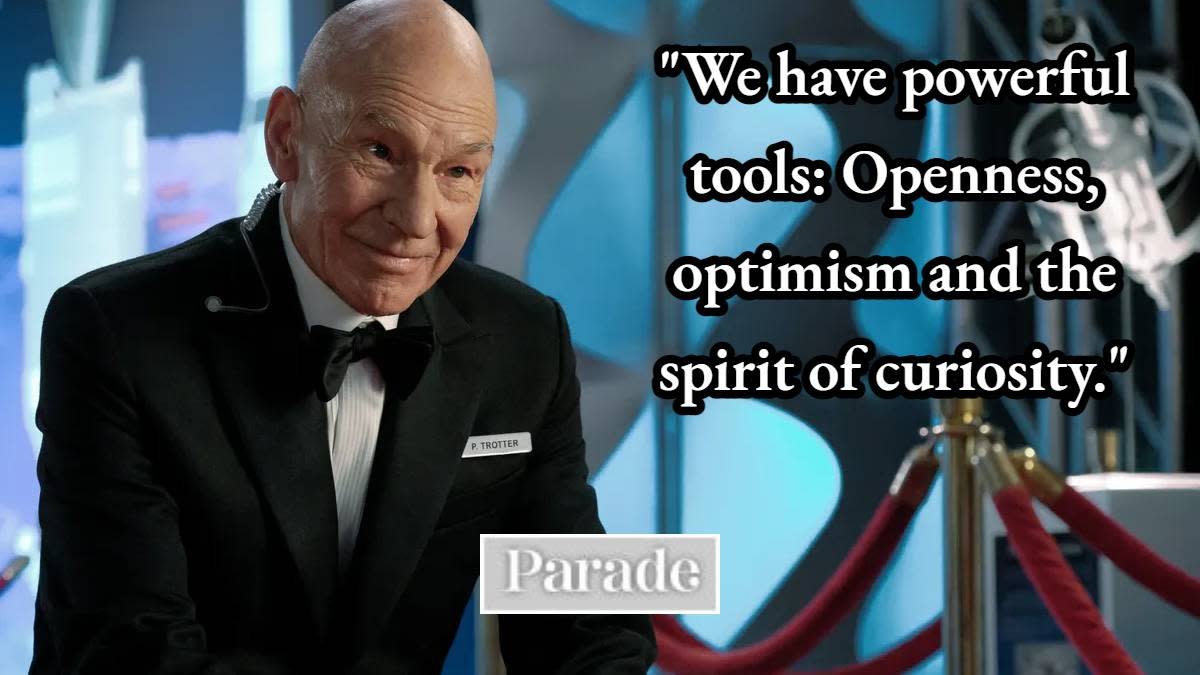
In the vast, often turbulent sea of human experience, we search for anchors – for voices of wisdom that cut through the noise and illuminate the path forward. Among the most resonant of these, for many, is that of Captain Jean-Luc Picard. Far from being merely a spacefaring hero, Picard, as brought to life by the masterful Patrick Stewart across 178 episodes of Star Trek: The Next Generation and four cinematic adventures, embodies a unique blend of intellectual gravitas and unwavering moral conviction. His Iconic Picard Quotes and Philosophical Insights transcend their 24th-century origins, offering timeless truths that continue to inspire and challenge us in our own complex lives.
Picard was, in many respects, a philosopher king navigating the stars, less inclined to brute force and more to negotiation, diplomacy, and the profound exploration of ethical dilemmas. His challenges, whether pondering the personhood of advanced AI or grappling with the moral failings of galactic governments, invariably boiled down to fundamental questions about what it means to be human, to lead, and to live with integrity. This guide isn't just a collection of memorable lines; it's an invitation to engage with the profound wisdom woven into the fabric of his character, offering a compass for navigating our own moral complexities and personal growth.
At a Glance: Picard's Enduring Wisdom
- Beyond Absolute Laws: Understand that life often defies rigid rules, demanding empathy and context.
- Internal Validation: Learn to measure your worth by your own standards, not external opinions.
- Cherish the Present: Embrace "now" as your most precious commodity, fleeting and irreplaceable.
- Accept Life's Losses: Recognize that failure can occur even with perfection; it's life, not weakness.
- Self-Improvement Focus: Your true competition is yourself, pushing for continuous personal growth.
- Time as a Companion: View time not as an enemy, but as a reminder to value every moment.
- Morality's Non-Negotiables: Reject the idea that a "higher purpose" can justify immoral actions.
- The Power of Knowledge: Cultivate a broad mind through history, art, and philosophy for deeper understanding.
- Conscientious Objection: Understand when moral imperatives outweigh blind obedience to authority.
- Living Over Legacy: Prioritize how you live your life over what you leave behind.
The Captain's Chair: A Platform for Philosophy
Jean-Luc Picard wasn't just a starship captain; he was an academic at heart, a connoisseur of history, art, and classical literature. His command decisions often stemmed from a deep well of ethical reflection, making him a figure whose leadership style was as much about moral reasoning as it was about tactical prowess. Unlike his more action-oriented predecessor, James T. Kirk, Picard often sought the diplomatic solution, the nuanced understanding, the path that preserved dignity and justice rather than merely winning a fight. This intellectual approach transformed Star Trek: The Next Generation into a weekly seminar on ethics, philosophy, and the human condition, all set against a backdrop of warp speed and alien encounters.
His challenges, though cloaked in the futuristic sheen of the 24th century—from wrestling with sentient artificial life forms to negotiating with omnipotent beings—mirror the ethical dilemmas we face today. The questions he posed about justice, freedom, responsibility, and the nature of existence remain profoundly relevant. It's this timelessness that elevates his quotes from mere dialogue to genuine philosophical insights, guiding us through our own moral quandaries and personal aspirations.
Let's dive into some of Picard's most potent statements and uncover the layers of wisdom they offer.
1. On Justice and the Fluidity of Law: "There can be no justice, so long as laws are absolute. Life itself is an exercise in exceptions."
This quote, delivered with characteristic gravitas, strikes at the heart of legal and ethical systems. Picard understood that while laws provide structure and order, a rigid, unyielding application can lead to profound injustice. Real-life situations are rarely black and white; they are rich with context, intent, and unforeseen circumstances that absolute rules fail to account for.
Philosophical Resonance: This idea echoes the concept of equity in law – the principle that justice sometimes requires a departure from strict legal rules to achieve fairness in individual cases. It challenges us to consider the spirit of the law over its letter, and to apply compassion and understanding when judging others or crafting rules for society.
Practical Takeaway for Today:
In our personal lives, this means cultivating empathy. Before judging a situation or a person, step back and consider the myriad factors at play. Are you applying an absolute rule to a situation brimming with exceptions? For leaders, it's a reminder that true leadership involves discerning judgment, not just rote application of policy. It’s about understanding that flexibility and a willingness to see beyond the obvious are crucial for fostering a truly just environment, whether in a family, a team, or a community.
2. On Self-Worth and Internal Validation: "You have to measure your successes and your failures within. Not by anything that I or anyone else might think."
In an age saturated with social media and constant comparison, Picard’s words are a potent antidote to external validation seeking. He champions an inner compass, a personal metric for success and failure that isn't swayed by the opinions or expectations of others. Your journey, your growth, your values—these are the true benchmarks.
Philosophical Resonance: This ties into Stoic philosophy, which emphasizes focusing on what is within your control (your thoughts, actions, character) and releasing attachment to external outcomes or others' perceptions. It's about building a robust sense of self that isn't dependent on fleeting applause or criticism.
Practical Takeaway for Today:
How often do we tie our self-esteem to promotions, likes, or the approval of peers? Picard challenges us to shift that focus inward. Take time to define what success truly means to you. Is it mastery of a skill, deep relationships, personal integrity, or making a genuine impact? By establishing your own internal scorecard, you free yourself from the tyranny of external judgment and cultivate a more resilient, authentic sense of self-worth. When assessing your progress, ask: "Did I live up to my own values today? Did I give my best effort?" The answer to those questions matters far more than any external accolade.
3. On Seizing the Present: "Seize the time… Live now! Make now always the most precious time. Now will never come again."
This is Picard's powerful call to carpe diem, to embrace the present moment with full awareness and appreciation. It’s a profound rejection of living in the past’s regrets or the future’s anxieties. The "now" is all we truly possess, and it's infinitely precious because it's utterly unique and fleeting.
Philosophical Resonance: This resonates with existentialist thought and mindfulness practices. Existentialists emphasize the importance of making conscious choices in the present moment, acknowledging our freedom and responsibility. Mindfulness, conversely, trains us to be fully present, observing our thoughts and surroundings without judgment, thereby deepening our experience of "now."
Practical Takeaway for Today:
In our fast-paced world, it's easy to defer joy, constantly looking ahead to the "next big thing" or dwelling on what could have been. Picard reminds us to ground ourselves. Practice gratitude for the small moments. When you're with loved ones, truly be with them. When you're working, focus on the task at hand. Recognize that every moment, however mundane, is a part of your irreplaceable life journey. What can you fully experience, appreciate, or achieve right now? Don't let precious moments slip by uncherished.
4. On Resilience and Accepting Loss: "It is possible to commit no mistakes and still lose. That is not weakness, that is life."
Perhaps one of Picard's most profound and comforting insights, this quote acknowledges the harsh reality that outcomes are not always within our control, even when we perform flawlessly. Life isn't always fair, and sometimes, despite our best efforts, we face defeat.
Philosophical Resonance: This speaks to the concept of tragic heroes in literature and the acceptance of the absurd in existentialism – that life can be inherently unfair and unpredictable. It challenges the common belief that success is always a direct result of effort and that failure is always a sign of incompetence.
Practical Takeaway for Today:
This is a vital lesson in self-compassion and resilience. When you've put in all the work, made all the right moves, and still fallen short, remember Picard's words. It doesn't mean you're weak or that your efforts were in vain. It simply means you're living. This understanding frees you from the burden of self-blame and allows you to process loss with grace, learn from the experience, and move forward without succumbing to despair. It reframes "failure" not as a personal flaw, but as an inherent part of the human experience. Understanding this principle can be crucial for anyone navigating complex personal or professional challenges, offering a foundational element of emotional intelligence.
5. On Self-Improvement and Internal Competition: "The only person you’re truly competing against is yourself."
This quote reinforces the idea of internal validation and focuses our competitive drive constructively. Instead of constantly measuring ourselves against others – a path often leading to envy or arrogance – Picard urges us to strive for personal excellence, to be better than our past selves.
Philosophical Resonance: This aligns with principles of continuous improvement and the pursuit of virtue. It's about personal mastery and focusing on your own growth trajectory, rather than being consumed by external rivalries.
Practical Takeaway for Today:
Shift your focus from outperforming others to outperforming yourself. What did you accomplish yesterday? Can you do better today? What skill did you have last year? How can you refine it now? This perspective fosters a healthier, more sustainable form of ambition. It encourages learning, adaptability, and a genuine pursuit of excellence that isn't poisoned by comparison or the fleeting nature of winning against someone else. It transforms competition into a powerful tool for self-actualization.
6. On Time as a Companion: "Someone once told me that time was a predator that stalked us all our lives. But I rather believe that time is a companion who goes with us on the journey, and reminds us to cherish every moment because they’ll never come again."
Building on his "seize the time" philosophy, Picard reframes our relationship with time itself. Rather than a relentless enemy that inevitably brings an end, time becomes a wise travel-mate, constantly whispering reminders to appreciate the journey. This perspective transforms anxiety about the future into gratitude for the present.
Philosophical Resonance: This elegant metaphor counters the common anxieties about mortality and the fleeting nature of life. It’s an embrace of stoic acceptance, combined with an active choice to find meaning and appreciation within the confines of our finite existence.
Practical Takeaway for Today:
Consider your relationship with time. Do you feel constantly rushed, like time is slipping away? Picard invites you to see time as a benevolent guide. When you feel overwhelmed, let time gently remind you to pause, to breathe, to truly see the beauty in a moment, or to find purpose in your current task. This perspective can reduce stress and increase your appreciation for the richness of your personal narrative, which is constantly unfolding with your steadfast companion, time.
7. On Impeccable Morality: "You cannot explain away a wantonly immoral act because you think that it is connected to some higher purpose."
This is a firm and unambiguous statement on ethical responsibility. Picard rejects moral relativism when it comes to clear-cut immoral actions, especially when people attempt to justify them under the guise of a greater good. The end does not always justify the means, particularly when the means are inherently cruel or unjust.
Philosophical Resonance: This stands against utilitarianism taken to an extreme, where the "greatest good" might justify harm to individuals. It echoes deontological ethics, which emphasizes duty and moral rules regardless of consequences, and highlights the importance of intrinsic moral values.
Practical Takeaway for Today:
This insight is critical in an era where actions, from political maneuvers to corporate decisions, are often justified by appeals to "efficiency," "progress," or "national security," even when they inflict clear harm. Picard urges us to maintain a strong moral compass. Before accepting a justification for a questionable act, ask: Does this act itself stand up to ethical scrutiny? Does it violate fundamental human rights or dignities? If an act is immoral on its face, no amount of purported "higher purpose" can sanctify it. This applies to our own choices as well; resisting the temptation to rationalize unethical behavior for perceived benefits.
8. On the Power of Knowledge: "Open your mind to the past: to history, art, philosophy. And then this will mean something."
Picard, the intellectual captain, consistently championed the pursuit of knowledge beyond technical skill. He understood that a rich understanding of human civilization – its triumphs, failures, creative expressions, and profound questions – provides essential context and meaning to our present and future.
Philosophical Resonance: This is a call to intellectual curiosity and the value of a liberal arts education. It suggests that a broad, humanistic understanding is not a luxury but a necessity for truly comprehending the world and our place within it. Without this context, our experiences can feel isolated and meaningless.
Practical Takeaway for Today:
In a world that often prioritizes specialized skills, Picard reminds us of the profound enrichment that comes from broad learning. Make time for non-fiction that explores history, watch documentaries on art movements, engage with philosophical texts. These aren't just hobbies; they are pathways to deeper understanding, empathy, and critical thinking. They provide frameworks for navigating new challenges and recognizing patterns, helping you to connect the dots in a complex world. When you understand the stories of humanity, your own story gains richer meaning.
9. On Conscientious Disobedience: "There are times, sir, when men of good conscience cannot blindly follow orders."
This is perhaps one of Picard’s most courageous and iconic statements, epitomizing his moral backbone. It directly addresses the ethical tension between duty and conscience, asserting that there are moral lines that even good soldiers or officers should not cross, regardless of orders from above.
Philosophical Resonance: This touches upon the concept of civil disobedience and individual moral responsibility, as explored by thinkers like Henry David Thoreau and Hannah Arendt (who discussed the "banality of evil" in the context of blindly following orders). It posits that our individual moral compass should, at times, supersede institutional authority.
Practical Takeaway for Today:
This is a powerful lesson for anyone in a position where they might be asked to compromise their ethics. It's about having the courage to speak up, to question, and, if necessary, to refuse to participate in actions that violate your core moral principles. This doesn't mean reckless defiance, but rather a thoughtful and principled stand. Whether it’s in a corporate setting, a community organization, or even within a family, knowing where your ethical boundaries lie and having the fortitude to uphold them is a hallmark of true integrity. Indeed, a significant part of understanding The Next Generations Captain Picard involves appreciating this profound commitment to personal conviction over mere obedience.
10. On Living a Meaningful Life: "What we leave behind is not as important as how we lived. After all, number one, we’re only mortal."
Picard offers a profound reorientation of priorities concerning legacy. In a world often obsessed with achievements, monuments, and lasting imprints, he gently reminds us that the quality of our life—how we treat others, the values we uphold, the journey we take—far outweighs the tangible artifacts or grand legacies we might aspire to leave.
Philosophical Resonance: This resonates with virtues ethics, which focuses on developing a good character and living a virtuous life, rather than solely on the consequences of actions or adherence to rules. It's also an acceptance of mortality, finding meaning in the finite nature of human existence.
Practical Takeaway for Today:
Are you consumed by what your obituary might say, or what kind of mark you'll leave on the world? Picard suggests a more present and inwardly focused approach. Instead of chasing external recognition or worrying about your "legacy," focus on embodying the values you cherish today. Live with kindness, pursue your passions, be present for your loved ones, contribute meaningfully to your community. These daily acts of living are the true measure of a life well-spent, and paradoxically, often form the most authentic and enduring legacy.
Beyond the Screen: Integrating Picard's Wisdom into Your Life
Jean-Luc Picard's enduring appeal lies not just in his commanding presence or his iconic starship, but in his unwavering commitment to humanitarian ideals, intellectual curiosity, and ethical leadership. His quotes aren't just clever lines; they are distilled lessons from a fictional life lived with immense purpose and profound self-awareness.
To truly honor Picard's legacy, don't just admire his words – internalize them.
- Reflect: Take one quote a week and truly ponder its meaning in your own life. Where does it challenge you? Where does it offer comfort?
- Act: How can you apply a specific insight to a current dilemma? Can you pause before judging, measure success internally, or seize a "now" moment?
- Discuss: Share these quotes with friends, family, or colleagues. Engage in the kind of thoughtful dialogue that Picard himself so often championed on the bridge of the Enterprise.
Picard's universe was one of infinite diversity in infinite combinations, a reflection of the rich tapestry of life itself. His philosophical insights serve as a guiding light, reminding us that even amidst the vastness of the cosmos, or the complexities of our own world, the true measure of our journey lies in our humanity, our choices, and the wisdom we gather along the way. So, go forth, and make it so.